The Indian Institute of Public Health (IIPH) in Hyderabad, along with its campuses in Bengaluru and Bhubaneswar, has been granted the status of a “deemed-to-be university” under a special category by the Ministry of Education. The recognition was officially announced through a Gazette notification on July 5.
In a conversation with The Hindu, K. Srinath Reddy, founder president of the Public Health Foundation of India (PHFI), sheds light on what this milestone means for the future of public health education in India, outlines the immediate next steps, and explains why Hyderabad is well-positioned to spearhead this transformation.
Q: What does this recognition mean for your larger vision for public health in India?
The Public Health Foundation of India was established to bring together multidisciplinary expertise that can drive multisectoral action for protecting and promoting health—from community-level interventions to individual well-being. To make this vision a reality, India needs a large and diverse public health workforce: researchers, programme implementers, community engagement specialists, and professionals who can support both policy formulation and on-ground execution of health initiatives at national and state levels.
Unfortunately, the existing institutional capacity was far from adequate. While medical colleges contribute in their own way, they lack the multidisciplinary approach that public health demands. Traditional universities, on the other hand, were not fully receptive to public health as an independent academic and professional field. This new recognition strengthens our ability to fill that gap and scale our efforts nationwide.
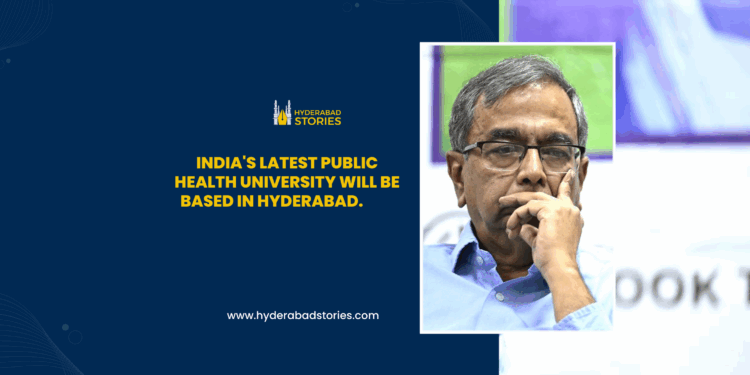
India’s Newest Public Health University to Be Headquartered in Hyderabad
The Indian Institute of Public Health (IIPH), Hyderabad—along with its campuses in Bengaluru and Bhubaneswar—has been granted the status of a deemed-to-be university under a distinct category by the Ministry of Education. The formal recognition was announced through a Gazette notification dated July 5.
In a conversation with The Hindu, Dr. K. Srinath Reddy, Founder President of the Public Health Foundation of India (PHFI), shared insights on what this milestone means for the future of public health education in India, the road ahead, and why Hyderabad is the ideal base for this transformation.
What does this recognition mean for your larger vision for public health in India?
The Public Health Foundation of India was established to bring together multidisciplinary expertise to drive multisectoral actions that protect and promote health—ranging from grassroots health promotion to individual care. Realizing that vision requires a vast and varied public health workforce: researchers, programme managers, community engagement experts, and those who can bridge the gap between policy and on-ground execution.
However, India’s existing institutional ecosystem was inadequate. While medical colleges made their contribution, they lacked the multidimensional scope that public health demands. Traditional universities were also slow to embrace public health as a distinct academic discipline. This recognition enables us to fill that critical gap.
What kind of challenges were you facing earlier that this new status will help overcome?
Until now, most of our institutes had to affiliate with existing universities, which often restricted our ability to create and launch innovative programmes quickly. We didn’t have the freedom to design curricula or introduce new courses as needed—except at our Gujarat campus, which had already achieved university status.
With this new designation, we gain much-needed autonomy and agility. It empowers us to respond faster to emerging public health challenges such as future pandemics, ageing populations, and the growing burden of non-communicable diseases.
What are the immediate priorities now that you have received the recognition?
Our first step is to establish the university’s governance and administrative framework. Following that, we’ll begin rolling out new academic programmes—many of which are already in the pipeline. Our aim is to start offering courses from the upcoming academic year, responding to the growing demand for skilled public health professionals across the country.
As someone who grew up in Hyderabad and studied medicine at Osmania Medical College, I feel a deep personal connection to this city. It gives me great pride to see Hyderabad become the nerve centre of this national initiative. That said, our vision remains firmly pan-India.
Will this change the kinds of academic programmes you offer, especially at the undergraduate level?
So far, our offerings have been limited to diplomas, Master’s in Public Health, and select PhD programmes—delivered either through affiliations or international collaborations. With our new autonomy, we’re now actively exploring undergraduate programmes as well, which will help build the public health workforce from the ground up.
How will the university respond to India’s evolving public health landscape?
India is experiencing multiple overlapping transitions—demographic, nutritional, and socio-economic—all of which are reshaping the nation’s health landscape. However, this transition is not happening at the same pace everywhere. Different states and districts are at different stages, with varied challenges and priorities.
As a university, our responsibility is twofold: to understand the national picture while also developing locally relevant solutions. That means training public health professionals who can design, adapt, and implement interventions rooted in local data and realities—ideally at the district level. Public health cannot be a one-size-fits-all approach. It must be responsive and context-specific.
What will this university status mean for Telangana?
Our commitment begins with the community around us. Telangana will be the first beneficiary of this new status. Our motto is to be locally committed and nationally engaged. The state has its own set of public health challenges, and we are ready to work closely with the Telangana government to support its health goals—whether that means workforce development, technical assistance, research collaboration, or on-ground intervention.
By establishing the university’s hub in Hyderabad, we are not just placing Telangana on the public health map—we’re making it a leader in shaping the future of health systems across the country.