How a 37-year-old Qualcomm engineer trades peak-hour traffic for two wheels, cleaner air, and a healthier life.
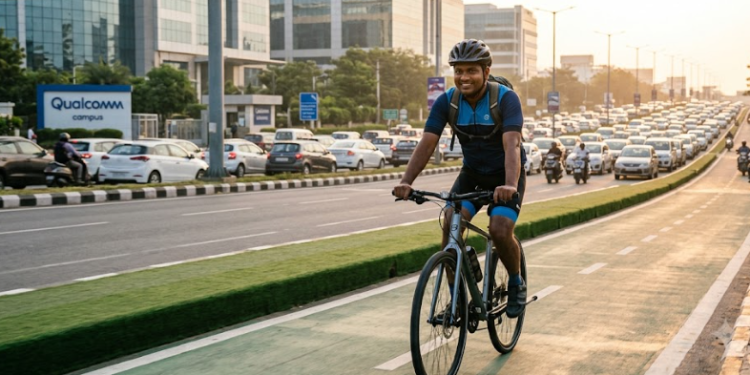
Every morning, while hundreds of commuters head to Hyderabad’s IT corridor in cars and on two-wheelers, 37-year-old Qualcomm techie Sibananda Patro pedals to work. For him, swapping four wheels for a bicycle wasn’t just a quirky experiment—it became the best lifestyle decision he ever made.
In a city where the rush toward HITEC City and Gachibowli often means crawling through endless bumper-to-bumper traffic, Sibananda’s daily ride offers a completely different perspective on the urban grind.
Beating the Rush Hour Blues
Navigating Hyderabad’s tech hub during peak hours can test anyone’s patience. Honking horns, sudden stops, and spiraling commute times are standard fare for most IT professionals. But while drivers sit trapped in gridlock watching traffic lights cycle through red and green, Sibananda glides right past them.
“People often think cycling in the city is stressful, but sitting in motionless traffic is far worse,” he shares. What used to be a frustrating, energy-draining drive has transformed into an active, liberating routine.
Health, Sustainability, and Peace of Mind
For Sibananda, the benefits extend far beyond beating the traffic:
- Built-in Fitness: Instead of trying to squeeze gym time into a busy corporate schedule, his daily commute doubles as a cardio workout.
- A Greener Footprint: Every kilometer pedaled is a step toward reducing carbon emissions in a fast-growing metro.
- Mental Clarity: Arriving at the office with fresh air in his lungs leaves him energized and ready for the workday, rather than drained by commuter rage.
Inspiring a Shift in Urban Mobility
Sibananda’s journey highlights a growing movement among Hyderabad’s tech community: re-evaluating how we move through our cities. While infrastructure for cyclists in major metros is still evolving, pioneers like him prove that sustainable commuting isn’t just possible—it’s deeply rewarding.
As Hyderabad continues to expand, stories like Sibananda’s remind us that sometimes the smartest tech solution isn’t high-tech at all. It’s simple, sustainable, and sitting on two wheels.
Would you like to tweak the tone to make it more personal, or expand on specific details like cycling infrastructure in the IT corridor?