
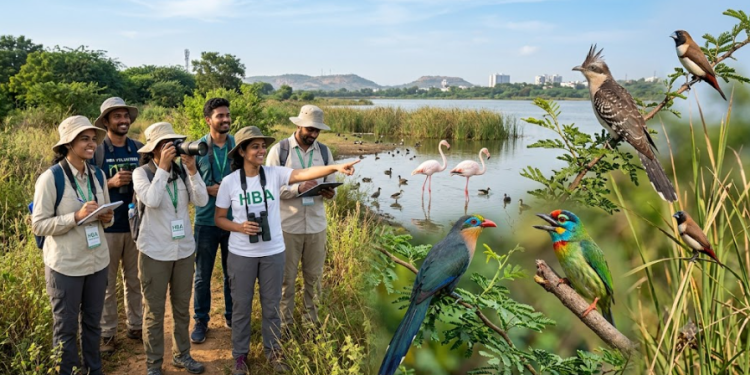
From flamingos to cuckoos, over 200 volunteers logged 1,250+ hours in the fourth season of the Hyderabad Bird Atlas to map our city’s thriving urban biodiversity.
Hyderabad isn’t just a city of bustling IT hubs, heritage monuments, and legendary biryani—it’s also home to a vibrant, feather-filled ecosystem.
The fourth season of the Hyderabad Bird Atlas (HBA) recently wrapped up, marking another major milestone for local urban conservation. Driven by a passionate community of citizen scientists, the 22-day survey kicked off on July 4 and brought together birdwatchers, nature enthusiasts, and conservationists to document the city’s avian life.
The HBA is a joint initiative spearheaded by the World Wildlife Fund for Nature-India (WWF), Hyderabad Birding Pals (HBP), and Deccan Birders (DB).
248 Species and Counting: The Highlights
With the fourth season now complete, the cumulative tally for the Hyderabad Bird Atlas has reached 248 species. Three new species were added to the atlas during this latest run:
- Greater Flamingo
- Yellow-footed Green-Pigeon
- Brown-capped Pygmy Woodpecker
During this 22-day stretch alone, participants logged over 75,000 individual birds across 158 species. While this seasonal count is slightly lower than the 166 species recorded during the Monsoon 2025 season, the numbers are currently under data review and the final species count may still rise.
Standout Sightings Across the City
Volunteers mapped urban pockets and water bodies across the state capital, turning up some notable local sightings:
- Tricolored Munia in Jalpally
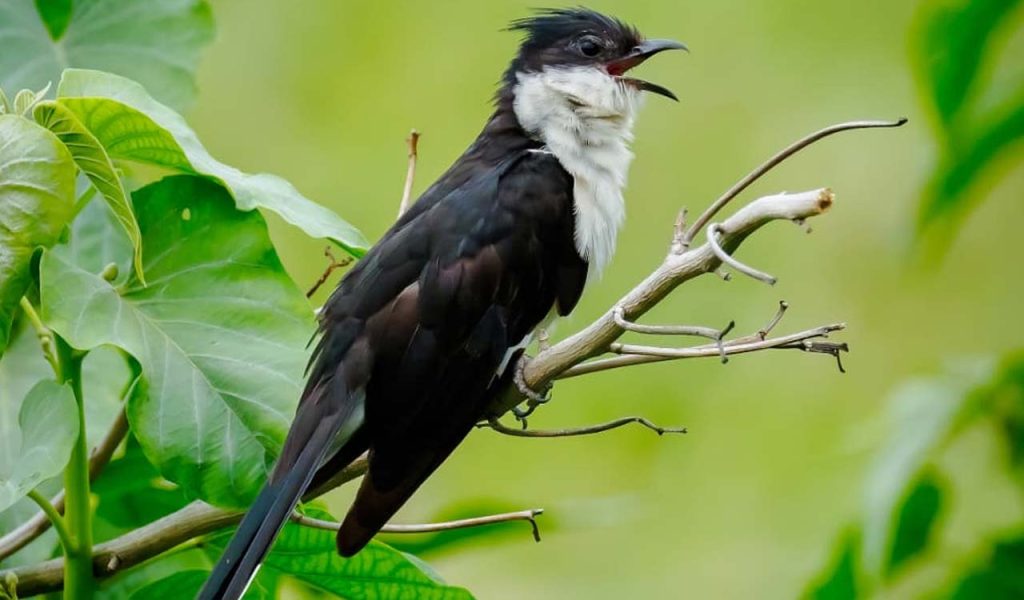
- Jacobin Cuckoo (a classic harbinger of the monsoon) in Balapur
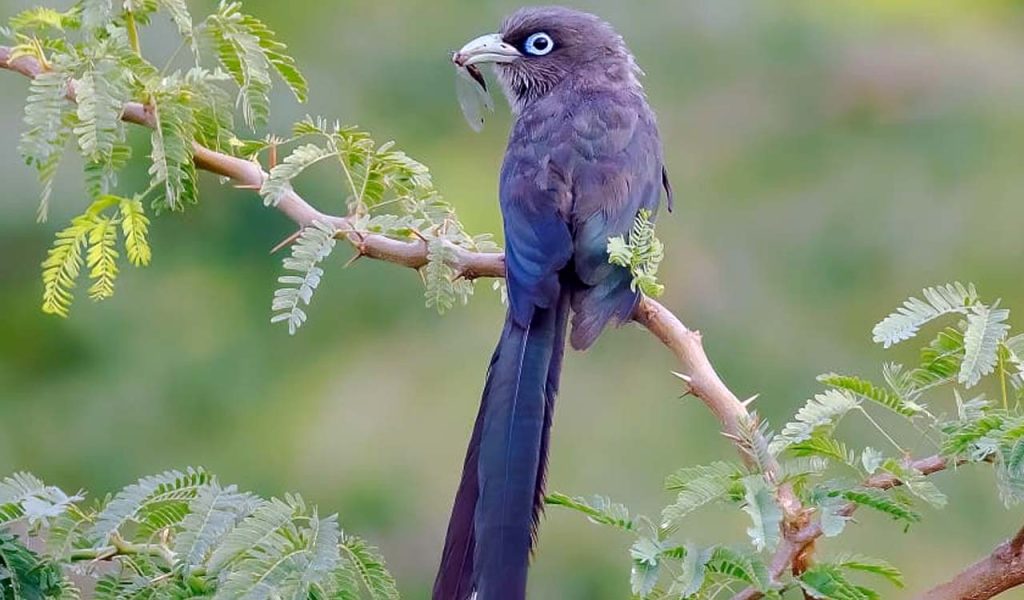
- Blue-faced Malkoha near Injapur Lake
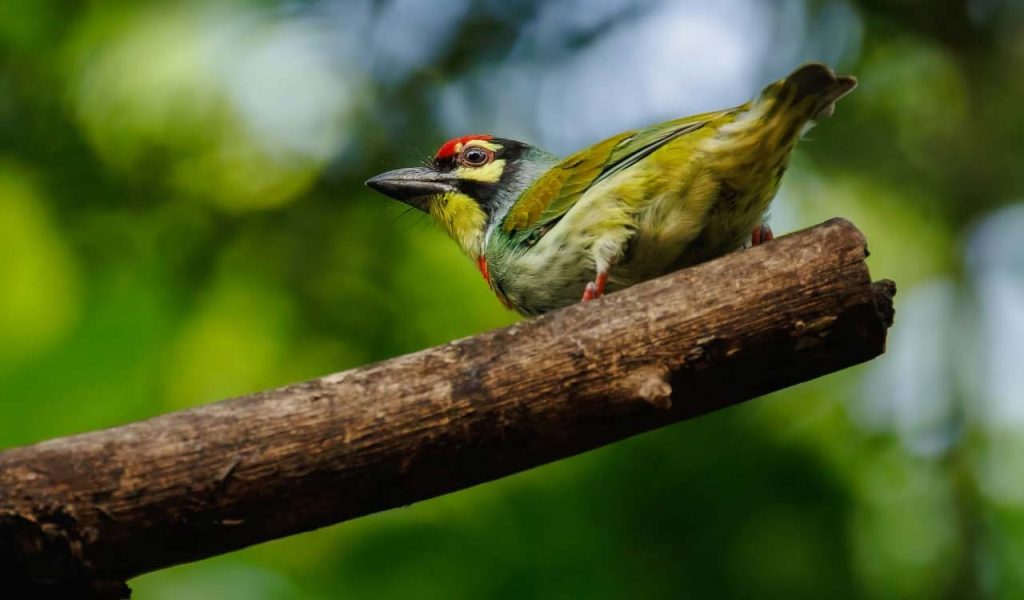
- Coppersmith Barbet observed across multiple survey zones
Powered by People: A 44% Surge in Volunteer Effort
What makes the Hyderabad Bird Atlas special is its grassroots foundation. Speaking to Telangana Today, HBA core member Sriram Reddy highlighted the incredible effort behind the numbers: over 200 volunteers contributed more than 1,250 volunteer hours. That represents a remarkable 44 percent increase in volunteer time compared to season three.
As Reddy noted, the atlas serves a purpose far beyond counting birds: the data collected offers a vital scientific baseline on bird distribution and seasonal patterns in and around Hyderabad, directly informing local conservation and urban planning efforts.
What’s Next for the Hyderabad Bird Atlas?
First launched in February 2025, the HBA conducts its field surveys twice a year, every February and July.
Looking ahead, the team is already gearing up for the fifth and sixth seasons—planned for February 2027 and July 2027—which will complete the third full year of the project. The HBA team warmly invites both returning volunteers and new faces to step out, grab a pair of binoculars, and help protect Hyderabad’s natural heritage.
Are you interested in participating in the next season of the Hyderabad Bird Atlas? What rare birds have you spotted around your neighborhood? Let us know in the comments below!