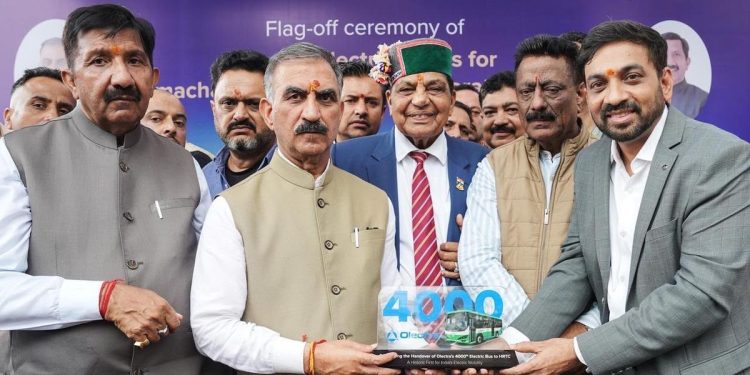
Olectra Greentech sets a national precedent by deploying 4,000 electric buses, cutting 6.5 lakh tonnes of CO₂ and leading India’s green transit revolution.
From the tech hubs of HITEC City to the sprawling industrial corridors of Telangana, Hyderabad has long been known as a engine of Indian innovation. But today, the city isn’t just powering the country’s software—it’s driving the future of sustainable transportation.
Olectra Greentech Limited, headquartered right here in Hyderabad, has officially become the first company in India to deploy 4,000 electric buses on the nation’s roads.
A Historic Milestone in the Hills
The landmark 4,000th bus was symbolically handed over in Shimla to Himachal Pradesh Chief Minister Sukhvinder Singh Sukhu and Deputy Chief Minister Mukesh Agnihotri. The moment was marked during the official flag-off of 297 new Olectra electric buses inducted into the Himachal Road Transport Corporation (HRTC) fleet.
“Becoming the first company in India to deploy 4,000 electric buses is not just an Olectra milestone, it is a defining moment for India’s electric mobility industry,” said Mahesh Babu, Managing Director of Olectra Greentech Ltd. “It reflects the growing confidence that public transport undertakings across the country have placed in electric mobility.”
By the Numbers: Impact Beyond the Milestone
Olectra’s rapidly growing fleet isn’t just transforming state transport infrastructure; it’s making a massive impact on air quality and public health:
| Metric | Impact |
| Buses Deployed | 4,000 e-buses nationwide |
| Distance Covered | Over 730 million green kilometers |
| Emissions Prevented | 6.5+ lakh tonnes (650,000+ metric tons) of CO₂ avoided |
Why This Matters for Hyderabad and India
As urban centers across India grapple with vehicle emissions and rising fuel costs, State Transport Undertakings (STUs) are increasingly turning to electric fleets. Olectra’s achievement proves that large-scale electric public transit is no longer a concept for the future—it’s actively operating on Indian highways, city avenues, and mountain roads today.
With a robust order pipeline and ongoing technological innovation, Hyderabad’s homegrown EV pioneer is paving the way for a cleaner, quieter, and zero-emission future for Indian commuter transit.