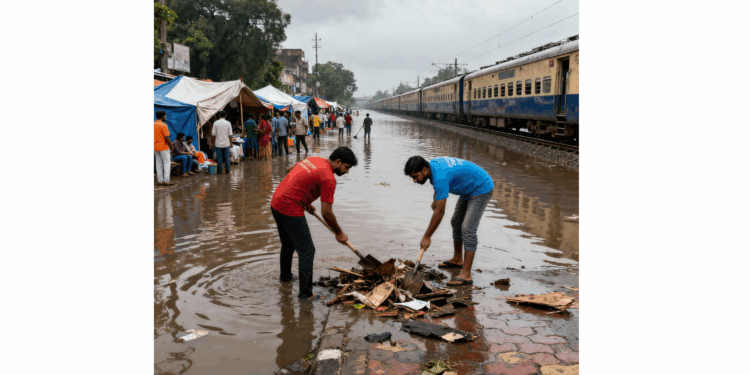
Hyderabad’s resilience was on full display as the city weathered the aftermath of the Montha downpour and widespread urban flooding, which brought traffic paralysis, property damage, and disruption to transportation and daily life—all while sparking an exceptional community effort and renewed conversations about future urban planning.
Impact of the Downpour: Chaos and Disruption
Cyclone Montha’s heavy rains in late October 2025 forced Hyderabad into crisis mode. Arterial roads transformed into rivers, slowing vehicles to a crawl and causing extensive waterlogging across major commercial and residential areas such as Musheerabad, Moosarambagh, and Chaderghat. The Musi River swelled dangerously, flooding low-lying neighbourhoods and the Mahatma Gandhi Bus Station, requiring evacuation of over 1,000 residents and stranding thousands of commuters. The South Central Railway (SCR) canceled the Secunderabad–Bhubaneswar Express and diverted long-distance trains including the Ernakulam–Patna and Ernakulam–Howrah Express, as floodwaters made tracks unsafe for travel.
Community Cleanup: Local Heroes Respond
As floodwaters receded, Hyderabad’s spirit was palpable in community mobilization to clean affected areas. The Greater Hyderabad Municipal Corporation (GHMC), Disaster Response Force, and NGOs set up relief camps in schools and public buildings, distributing food, blankets, and supplies to evacuees. Volunteer groups led localized cleanups—HYDRAA’s “Operation Clean-up” at Bathukammakunta and coordinated drives along the Musi River restored public spaces and helped prevent post-flood disease outbreaks. Residents, often frustrated by poor drainage and city planning, took to social media and local forums to organize debris removal and demand more robust solutions.
Rethinking Urban Planning: Lessons for the Future
The 2025 floods highlighted systemic urban vulnerabilities: ageing drainage systems, encroachment on natural waterways, and unchecked urban expansion. Experts and planners are now urging Hyderabad to shift from reactive measures to comprehensive urban flood management, which includes:
-
Investing in stormwater drain upgrades and smart early-warning systems.
-
Protecting natural buffers such as lakes and green corridors from encroachment.
-
Mandating permeable pavements, updated zoning, and climate-resilient infrastructure in new developments.
-
Strengthening communication about reservoir releases and disasters for timely public alerts.
Hyderabad’s experience with Cyclone Montha has spurred a commitment to not just rebuild, but to prepare for a climate-challenged future—a story of a city tested, responding with resilience, unity, and forward-thinking innovation.