
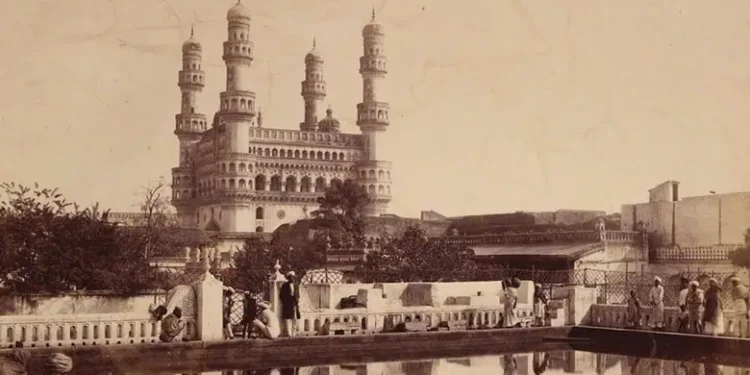
Tracing the evolving rhythm of Hyderabad’s most sacred month, from the thunder of Naubat Pahad to the fading echoes of the Sehriwalas.
Ramzan has shaped the rhythm of life in Hyderabad for centuries. In the city’s historic quarters, from the silent hours before sunrise to the communal joy of Iftar at sunset, traditions create a shared cultural and social experience that transcends time.
The Era of Cannons and Community
During the reign of the Nizams—who ruled the Princely State until its merger with India in 1948—the observance of Ramzan was not only deeply spiritual but also marked by unique auditory rituals. These sounds helped the faithful keep time and brought the community together in a singular, synchronized pulse.
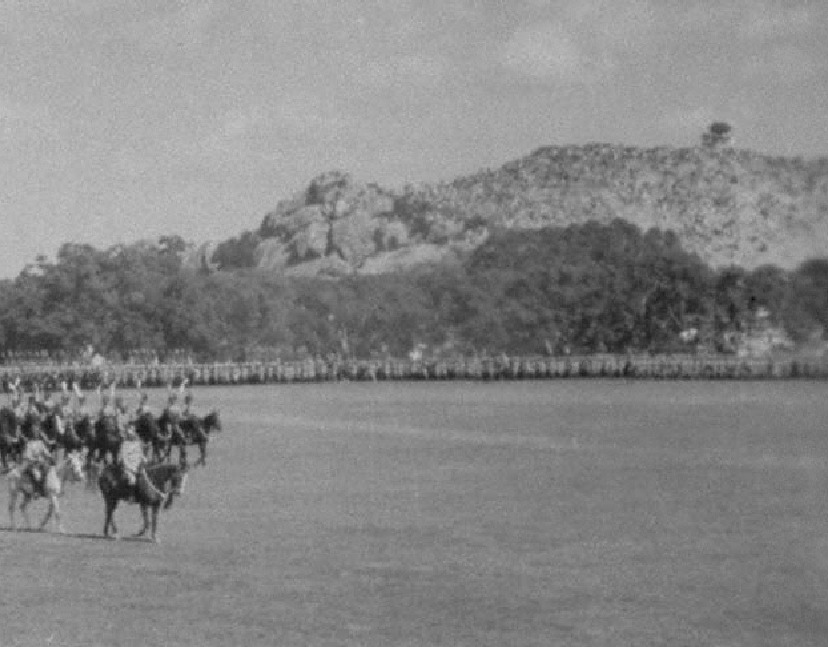
One of the most striking traditions of that era was the Ramzan Topu (cannon). To signal Iftar at sunset, ceremonial cannons were fired from prominent elevations such as Naubat Pahad, where the Birla Mandir currently stands. This elevated position allowed the thunderous roar to ripple across the landscape, reaching deep into neighborhoods like Charminar. The cannon blast was more than a signal; it was an auditory thread connecting thousands of homes, reinforcing the importance of collective observance.
The Silent Dawn
Interestingly, historical accounts—including reports from the Times of India—note that cannons were never fired at Sehri (pre-dawn). This was a deliberate choice to maintain the tranquility of the night, allowing households to wake in peace and prepare their meals privately.
Life in the Nizami era was generally quieter. People retired early, the now-famous 24-hour food stalls were non-existent, and breaking the fast was largely an intimate, domestic affair rather than the massive public spectacle it has become today.
The Digital Pulse of Modern Iftar
Today, the thunder of the Ramzan cannons has faded from the skyline. In their place, a decentralized network of mosque loudspeakers and short siren bursts signals the approach of Iftar. What was once a single, city-wide boom has become a symphony of localized announcements, synchronized with precision prayer timetables.
The dependence on a public signal has further diminished with the rise of technology. Mobile apps and digital calendars now provide down-to-the-second timings, ensuring the fast is broken with mathematical accuracy, whether one is in the Old City or the high-rises of Cyberabad.
The Fading Echo of the Sehriwala
Yet, in the quiet hours before dawn, one age-old tradition still holds its ground. The Sehriwalas—the pre-dawn callers who walk through the lanes beating drums or calling out reminders—continue their rounds in a few pockets of the city.
Once indispensable to entire neighborhoods, they now compete with the relentless glow of smartphone alarms. As younger generations seldom step in to continue the role, the Sehriwalas are gradually becoming a fading echo of Hyderabad’s older Ramzan soundscape—a hauntingly beautiful reminder of a city that once woke to the sound of a human voice rather than a digital beep.
A Note on the ‘Ganga-Jamuni’ Spirit
Whether it was the roar of the Nizam’s cannon or the modern-day rush for Haleem, Ramzan in Hyderabad has always been a season where the city’s secular fabric shines brightest. The “sound” of the month may change, but the spirit of togetherness remains the city’s true North Star.