The inception of Bamboo House India
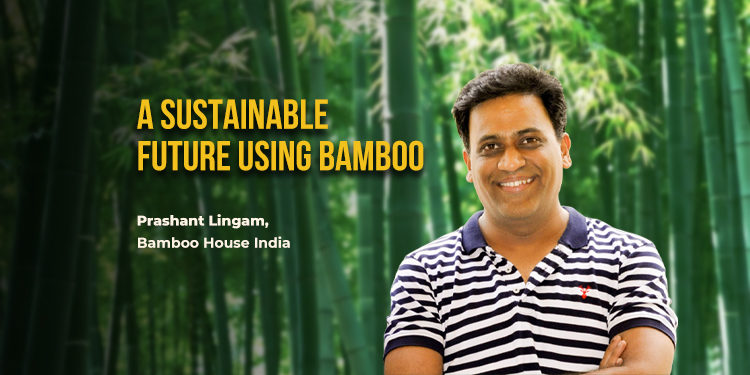
Prashant belongs to a simple, middle-class Telugu family. Prashant and Aruna, the co-founder of Bamboo House India tie the knot in 2006. The inception of Bamboo House India is just as interesting as the power couple themselves. It was just another day in their married life when Aruna asked Prashant for furniture shopping. Although reluctant with the idea of shopping, Prashant went for it as he could not see his newlywed wife unhappy. Aruna was in search of an eco-friendly sofa-set but unfortunately, they failed to find anything in Hyderabad. What happens next is nothing less than a crazy Tollywood movie plot. They came back home and started looking for eco-friendly sofa-sets and the search took them to Katlamara, a small village in Tripura, West Bengal.

Katlamara is also known as bansh gram meaning Bamboo village. When they visited the village they saw all the communities were making bamboo handicrafts. Prasant said it was love at first sight. They immediately got connected with the idea of making bamboo houses. They decided to work with the communities to help them out as they were not making a decent living. I come from a typical middle-class Telugu family, all this nonsense is not allowed, said the founder of Bamboo House India. When they shared this idea with the family, it was not welcomed. The couple was adamant about their idea and they went ahead with it fitting against the odds. In the fourth month of their marriage, they went for a study tour across all the forest locations of the country. The bouncer in our journey was the Indian Forest Act 1927. The act says you cannot cut bamboo from the forest and bring it to the city without the written permission of the government. This was the first obstacle in our journey and the second was a bomb blast. We survived both. Three years after immense hard work they still got into a debt of 60lakh. Their idea was rejected by everyone and they found it even more difficult to earn two meals a day.
We were searching for food for the next two years, we had nothing to eat. We used to eat only in the afternoon. Whatever money left, we saved it for our kid. We did not dare to ask for more money from anyone. Everyone said this idea is not going to work. We lost 6 of our dear ones during this time. Slowly and eventually we went into depression and decided to end our lives. What shopped us was our kid. We then decided to let’s give it one last shot. We sold all the jewelry we had and collected 60 thousand rupees from that and we built our first bamboo house. There was no looking back. We built 150 bamboo houses in the next two years. We got enough media coverage. We used to see ourselves in the papers every day. We went to every engineering college with our idea but they did believe in our business model. The top B schools were not interested in our business model as well. Then something interesting happened, all the global universities starting from Harvard, Stanford, ISB doing a case study on our business model. The magic was yet to happen when we got an invitation from the US government, my cofounder Aruna got an opportunity to visit the White House and met the social innovation team of President Barack Obama to discuss possible growth for our business. Another milestone was when the Government of Kenya asked us to build bamboo houses in their country, says Prashant Lingam.
Measures your Company is taking during the Pandemic?

We have continued to support all our artisans during this entire period and ensured production continues despite no sales and same with our waste picking community too all because we don’t have excess money and manpower comes first for us, if we have money and profits as agenda, we tend to decide to cut corners but for us, our community members are our family, so we pulled it through as this was one of many such occasions in our entrepreneurial journey where we all together steered difficult times together. We are trying to set weak systems, develop new products which we could not earlier, and focus on all the aspects which we kept delaying, so pandemic has been a good learning experience to make corrections for things going wrong.
Current Business Model and Future Company Expansion Plans?
We are currently focusing on improving upon our operations and cutting down costs where all possible and add products in our portfolio which will support our artisans and waste pickers and venturing for key partnerships and strategic decisions which will sail us through this pandemic, but largely our work has not much affected as we never believed in fancy offices and high operating expenses, since 2006 we have been from our house terrace and we continue to do as will forever do so.
Plastic waste houses take a little more important for us now as bamboo largely has established itself and every house we construct with plastic waste saves around 1000 kgs going to landfills and at least 25 waste pickers get employed during the process, we are also working on to develop smaller machines for startups to make an entry into the arena of plastic waste business with a smaller investment and also parallel focus on building a model to promote bamboo entrepreneurship in the country where upcoming entrepreneurs can start bamboo starts-ups with as less as Rs.50,000 investment and support rural and tribal artisans in the process, we have learned so much in our last 15 years journey, we don’t want anyone to go through the same rough patch and benefit through us. For us it is not how colorful our balance sheet looks, it is just how many lives we have touched and impacted which makes us happy and content.