Key details on eligibility criteria, the ₹5 lakh state subsidy, payment schedules, and how to apply for the CURE project.
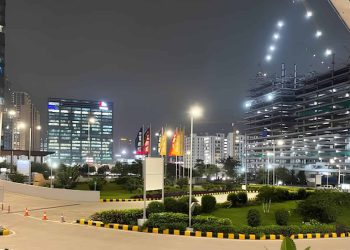
The landscape of Hyderabad’s urban development is taking a major step forward. The Telangana government has officially launched the Indiramma Housing Scheme across the Core Urban Region (CURE), introducing high-rise apartment complexes designed to bring affordable, quality housing to low-income families.
If you or someone you know is planning to apply, here is a complete breakdown of how the scheme works, who qualifies, and how the financial contribution is structured.
1. The Housing Model & Unit Dimensions
Unlike single-story layouts of past projects, these homes will be built as multi-storey towers to optimize space within the city core. The land for these units is provided by the state at zero cost to beneficiaries.
- Carpet Area (Usable Space): 400 sq. ft.
- Built-Up Area: 528 sq. ft.
- Annual Target: 1,00,000 affordable houses within the first year.
2. Cost & Payment Breakdown
The estimated total construction cost per flat is ₹11 lakh. The state government covers nearly half of this expense, leaving the rest to be paid by the applicant in manageable stages.
| Expense Breakdown | Amount |
| Total Flat Valuation | ₹11,00,000 |
| Telangana State Subsidy | ₹5,00,000 |
| Net Beneficiary Share | ₹6,00,000 |
Beneficiary Installment Schedule
To make payments manageable, the ₹6 lakh contribution is split into 4 installments:
- 1st Installment: ₹1,00,000
- 2nd Installment: ₹2,00,000
- 3rd Installment: ₹2,00,000
- 4th Installment: ₹1,00,000 (Balance)
Note on EMD: All applicants must submit a ₹10,000 Earnest Money Deposit (EMD) alongside a ₹100 non-refundable application fee. If selected, your ₹10,000 deposit is automatically adjusted into your ₹6 lakh contribution. If your application is not selected, the ₹10,000 EMD will be fully refunded.
3. Eligibility Criteria
To ensure homes reach those who need them most, strict guidelines have been established:
- Residency: Must have been a resident of Hyderabad (CURE area) for at least 10 consecutive years.
- Property Limits: Neither the applicant nor any immediate family member can own a house, flat, or residential plot within the Outer Ring Road (ORR) or CURE region.
- Income Cap: Total annual household income must not exceed ₹6 lakh.
- Prior Welfare Check: Applicants must not have previously received benefits from state or central government housing schemes.
4. Selection & Verification Process
To maintain transparency and prevent duplicate entries, the state is using a multi-step screening pipeline:
1.Application Submission:MeeSeva / Online / WhatsApp.
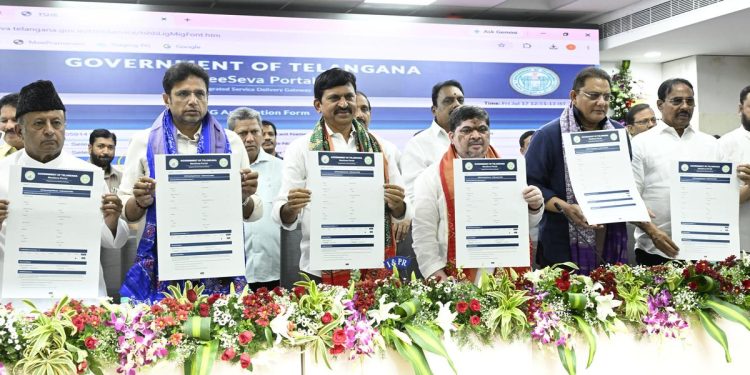
Submit the official form alongside the ₹100 processing fee and ₹10,000 EMD through MeeSeva centres, the web portal, or official WhatsApp channels.
2.360-Degree Background Verification:Scrutiny Phase.
Authorities conduct a cross-verification check on income records, family declarations, and duplicate entries.
3.Computerized Lottery Draw:Selection Phase.
If the number of verified applications exceeds available units in a constituency, beneficiaries will be chosen via a transparent lottery system.
4.On-Site Verification & Stage Payments:Provisional Allotment.
Selected applicants undergo field verification and begin paying their 4-stage contribution installments as construction progresses.
5.Registration & Possession:Final Handover.
Upon completion of stage payments and construction, official property registration is finalized and keys are handed over.
5. What’s Next? Expansion & Middle-Income Plans
The Housing Board has announced locations across 16 Assembly constituencies based on immediate land availability, with plans to expand to remaining areas shortly. Furthermore, government officials hinted that a dedicated housing scheme for the Middle Income Group (MIG) will be announced soon.