In Hyderabad, biryani is more than just food — it’s tradition, pride, and celebration served on a plate. It takes center stage at every grand feast, drawing food lovers from around the world to the city in pursuit of its unmatched flavor. Yet, the quest for the perfect biryani in Hyderabad is an endless one, with every plate sparking a new opinion. Still, ask any true Hyderabadi, and you’ll hear it time and again — no hotel biryani compares to the one served at weddings. There’s just something about it that makes it unforgettable.
It’s a debate that never quite ends. Some say wedding biryani tastes better because of the joyous atmosphere, while others swear it’s the traditional technique that sets it apart. But one thing is certain — when it comes to depth of flavor and irresistible aroma, wedding biryani holds a magic that hotel versions often can’t match.
So what makes it so different?
Siasat.com takes a closer look.
Dum makes all the difference
“Biryani isn’t something you rush,” says a seasoned bawarchi with over 30 years of experience. “At weddings, we start cooking early in the morning and serve it late at night — that slow dum brings out the real flavor.”
https://www.instagram.com/reel/C27QZDvBsVS/?utm_source=ig_web_copy_link
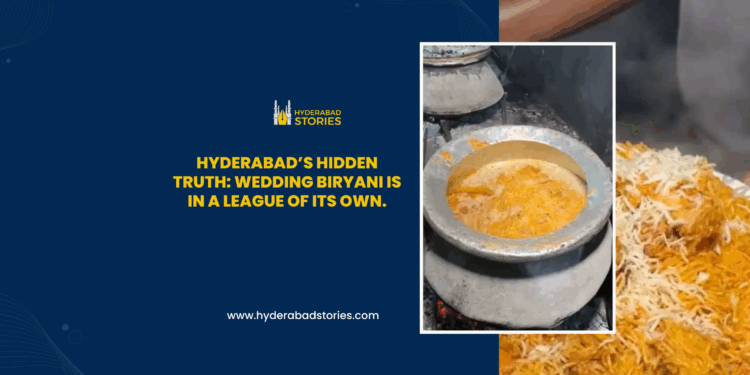
Wedding biryani is slow-cooked the traditional way — using the dum method. Layers of marinated meat and partially cooked basmati rice are assembled in a massive degh (copper vessel), sealed tightly with dough, and placed over a wood fire. Once sealed, the biryani is left untouched for hours. Inside, steam builds naturally, gently infusing every grain with the essence of whole spices, saffron, and rich meat juices. This patient, time-honored process is what gives shaadi biryani its unmatched depth, tender texture, and signature smokiness.
In contrast, hotel biryani is usually prepared in smaller batches over gas stoves. The process is quicker and more consistent — ideal for commercial kitchens — but it lacks the rustic intensity and earthy aroma that only a wood or coal fire can deliver.
Timing also plays a crucial role. At weddings, biryani is typically served fresh and piping hot, straight from the degh, after a natural resting period that lets the flavors settle and deepen. In hotels, however, biryani is often kept in warmers or reheated in portions. While efficient, this method can strip the dish of its layered freshness and subtle complexity.
The Bawarchi Factor
Wedding biryani is almost always in the hands of traditional bawarchis — seasoned cooks who have spent decades perfecting their craft, often learning through family legacies rather than culinary schools. These masters don’t rely on written recipes. Spices are measured by instinct, and the readiness of rice is judged with a practiced glance. As one Hyderabadi Reddit user aptly put it: “The best Hyderabadi biryanis are made at weddings. Hire a master with experience, and the food is gonna be great.”
Hotel kitchens, by contrast, focus on consistency. Chefs follow fixed measurements, adjust spice levels to appeal to a broader palate, and prioritize standardization — a necessary compromise to cater to both tourists and locals.
https://www.instagram.com/reel/CzLhmC3vHds/?utm_source=ig_web_copy_link
The Emotional Context in Biryani
Beyond technique and ingredients, there’s something intangible that sets wedding biryani apart — the setting. It’s not just about the food, but the moment. Surrounded by loved ones, dressed in festive finery, sharing laughter and stories, people eat with more than just their mouths. In that atmosphere of celebration and connection, biryani becomes more than a dish. It becomes an emotion. And somehow, that joy lingers — not just in the air, but in the memory of every bite.
So, weddings or hotels — where does the best biryani in Hyderabad truly lie?
For most locals, the answer is simple. Hotel biryani may be delicious, but wedding biryani is unforgettable. It’s not just about the ingredients or the technique — it’s about the atmosphere, the emotion, and the grandeur that surrounds it. In a city that treats biryani as a way of life, the most cherished plate doesn’t come off a menu. It arrives at a marriage, wrapped in celebration, memory, and flavor that lingers long after the last bite.