At Chitramayee State Gallery of Art, acclaimed sculptor Dr. Hothi Baswaraj turns three decades of creative devotion into a powerful reflection on fading agrarian roots, sacred livestock, and modern ecology.
For centuries, the Basava (the bull) stood at the very beating heart of Deccani farming. More than just a farm animal, it was a trusted partner in tilling the soil, a source of vital organic manure, and a sacred bridge linking daily survival with spiritual tradition.
Today, as tractors replace livestock and chemical fertilizers quietly reshape rural ecosystems, the familiar presence of the Basava is fading from the Telangana landscape.
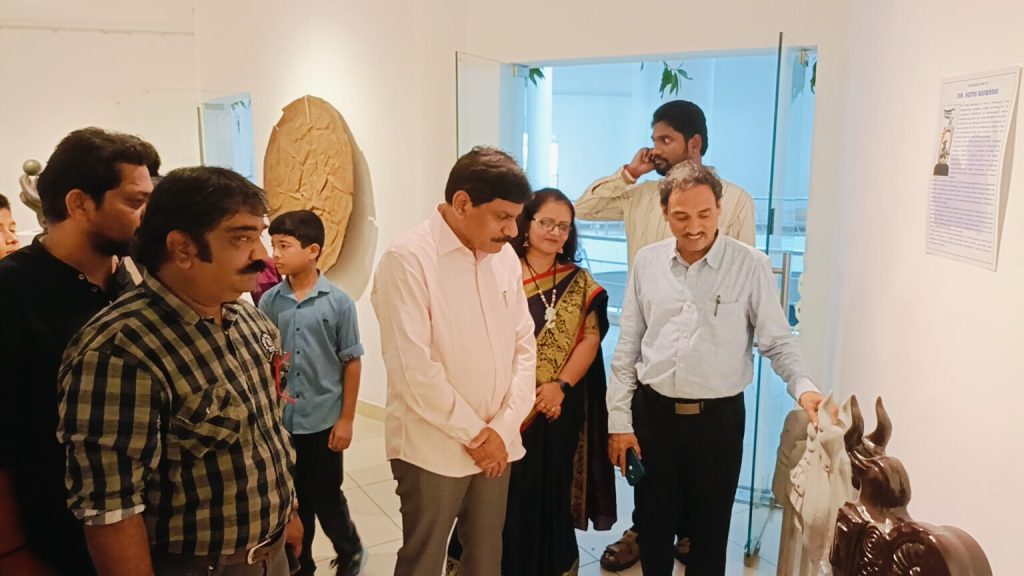
A recent solo exhibition at the Chitramayee State Gallery of Art in Madhapur brought this evolving heritage back into sharp focus. Created by celebrated sculptor, painter, and installation artist Dr. Hothi Baswaraj—who also serves as General Secretary of the Telangana Sculptors and Artists Association—the showcase brought together 30 years of artistic reflection on the cultural, spiritual, and ecological weight of the bull.
Rooted in Earthen Memories
For Dr. Baswaraj, whose distinguished contributions to visual arts earned him national recognition and an honorary doctorate, his bond with the subject is deeply personal.
“I grew up watching my mother shape small earthen sculptures of the Basava for household worship,” Dr. Baswaraj recalled. “Observing people in our village create these sacred forms ignited my curiosity early on. I have been sculpting and painting them continuously for the past three decades.”
That childhood reverence eventually matured into a career that transformed Telangana’s civic landscape. Beyond crafting the iconic Basaveshwara statue on Hyderabad’s Tank Bund (inaugurated in 2017) and landmark monuments of Chhatrapati Shivaji Maharaj, Louis Braille, and Dhanwantari, Dr. Baswaraj has brought indigenous culture to life through immersive museum installations in Mannanur, Srisailam, Jodeghat, Medaram, and Hyderabad.
In his latest showcase, however, his focus turned inward toward two pressing themes:
- Vanishing Organic Cycles: The shift from natural cattle manure to heavy chemical fertilizers has degraded long-term soil health and disrupted regional ecosystems.
- Loss of Cultural Anchors: The bull, once venerated as a living symbol of divinity and survival, is increasingly treated as an obsolete relic in an age of automated farming.
Folklore, Scrap Metal, and Festival Synergy
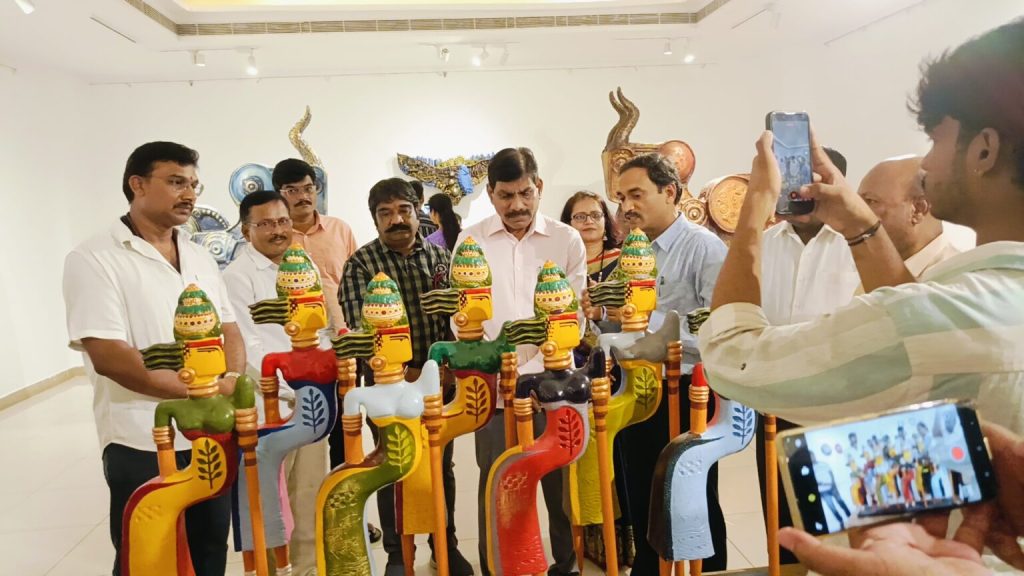
Curated by Dr. Satyanarayana Dyavanapalli, the exhibition spanned a dynamic range of mediums—from traditional clay forms and tribal motifs to contemporary sculptures forged from industrial iron waste.
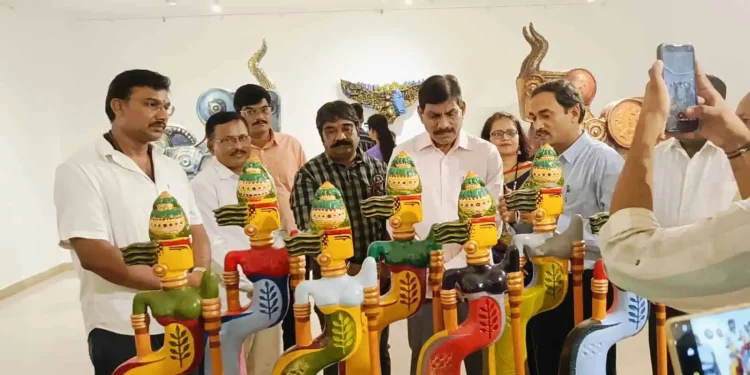
A standout highlight was a seven-part sculpture series celebrating the regional folk festivals of Bathukamma and Bonalu, effortlessly weaving floral and maternal reverence together with agrarian heritage. Notable pieces on display included Saptamatrikas – Bonalu, Shivadutha Basava, Winning Rooster, and Selfie.
As curator Dr. Dyavanapalli noted, every piece in the collection carries its own distinct concept, social message, and deep-rooted cultural context.
Speed Sculpting Blindfolded & A 25-Year Retrospective
Demonstrating a mastery of spatial proportion built over decades of daily work, Dr. Baswaraj captivated attendees with a live performance. Working completely blindfolded, he sculpted detailed figures of Lord Ganesha, Sri Rama, and Goddess Durga—completing each piece in under an hour.
“Because I sculpt every single day, the proportions are deeply ingrained in my muscle memory,” Dr. Baswaraj explained. “Creating these forms without sight becomes second nature.”
Marking another milestone, the exhibition hosted the official release of Baswarajeevam, a landmark book documenting Dr. Baswaraj’s body of work over the past quarter-century. Pairing rare archival photographs with detailed commentary, the monograph stands as a complete visual archive of his 25-year journey in painting and sculpture.